I moved back to Albania a year ago with a strange mix of certainty and doubt.
Certainty that the Western Balkans has builders who can compete anywhere. Doubt that we would ever build the kind of cross-border muscle that makes investing and scaling feel normal, because this region trains you to expect friction.
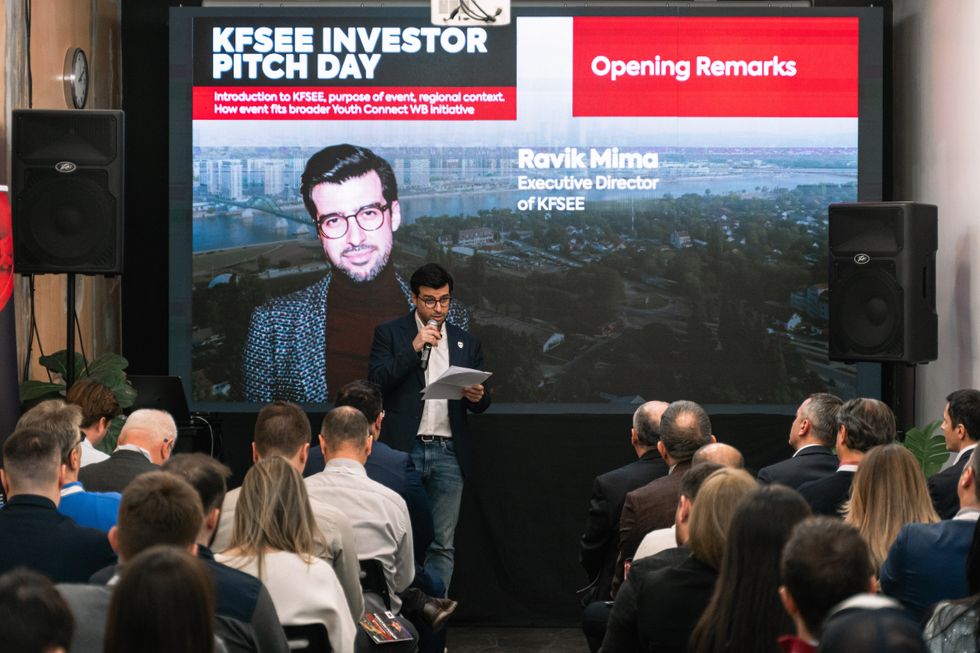
On February 18 in Belgrade, at ICT Hub, I watched that doubt loosen its grip–not as a feeling, but as a fact. KFSEE brought together around 90+ ecosystem players in one room, including 30 investors, 20 startups/founders, and 40 ecosystem builders, media and operators who are usually scattered across borders and calendars. The Albanian Ambassador also joined the event, adding to the cross-border institutional presence in the room.
That kind of room doesn’t happen by accident.
Not because everything went smoothly. It didn’t. Nothing here ever does. But because something important happened: the right people showed up with intent, and they behaved like the next step mattered.
Last October in Tirana, at the Western Balkans Convergence Forum, we did the unglamorous work of telling the truth. We talked about fragmentation, policy volatility, and how grant dependency can quietly replace ownership. We talked about diaspora capital that wants to help but doesn’t know where to go. We talked about talent leaving, not because people don’t love home, but because “home” doesn’t always reward builders.
That day ended with a commitment: stop diagnosing the problem like we’re writing another report, and start building mechanisms that work in the real world.
Belgrade was the next test of that commitment.
Bringing nearly 30 investors into one room in the Western Balkans is not accidental. It takes relationship capital built over years, repeated follow up, and the willingness to insist on standards when shortcuts would be easier. Cross-border angel investing here is logistics and discipline: different jurisdictions, different risk appetites, and zero room for sloppy follow up.
Ravik Mima, Executive Director of Keiretsu Forum Southeast Europe, opened the afternoon by setting expectations: KFSEE is here to evaluate substance and then follow through. Their job is to bring the right people into one process–and make sure the next step happens–without pretending investment is automatic or guaranteed.
Immediately after, Miodrag Milosavljević from OSF Western Balkans reinforced something that landed because it was practical: rooms like this only work if everyone does their part. Founders get clearer and execute. Investors engage seriously. Ecosystem builders don’t just attend, they connect people, mentor founders, and build pathways that keep young founders in the game.
This is also why OSF-WB backed it through Youth Connect Western Balkans: to make cross-border pathways real for young and first time founders, not theoretical.
Nir’s keynote was impactful: build cultures that learn fast, treat failure as information, and don’t wait for permission.
Then the pitches began.
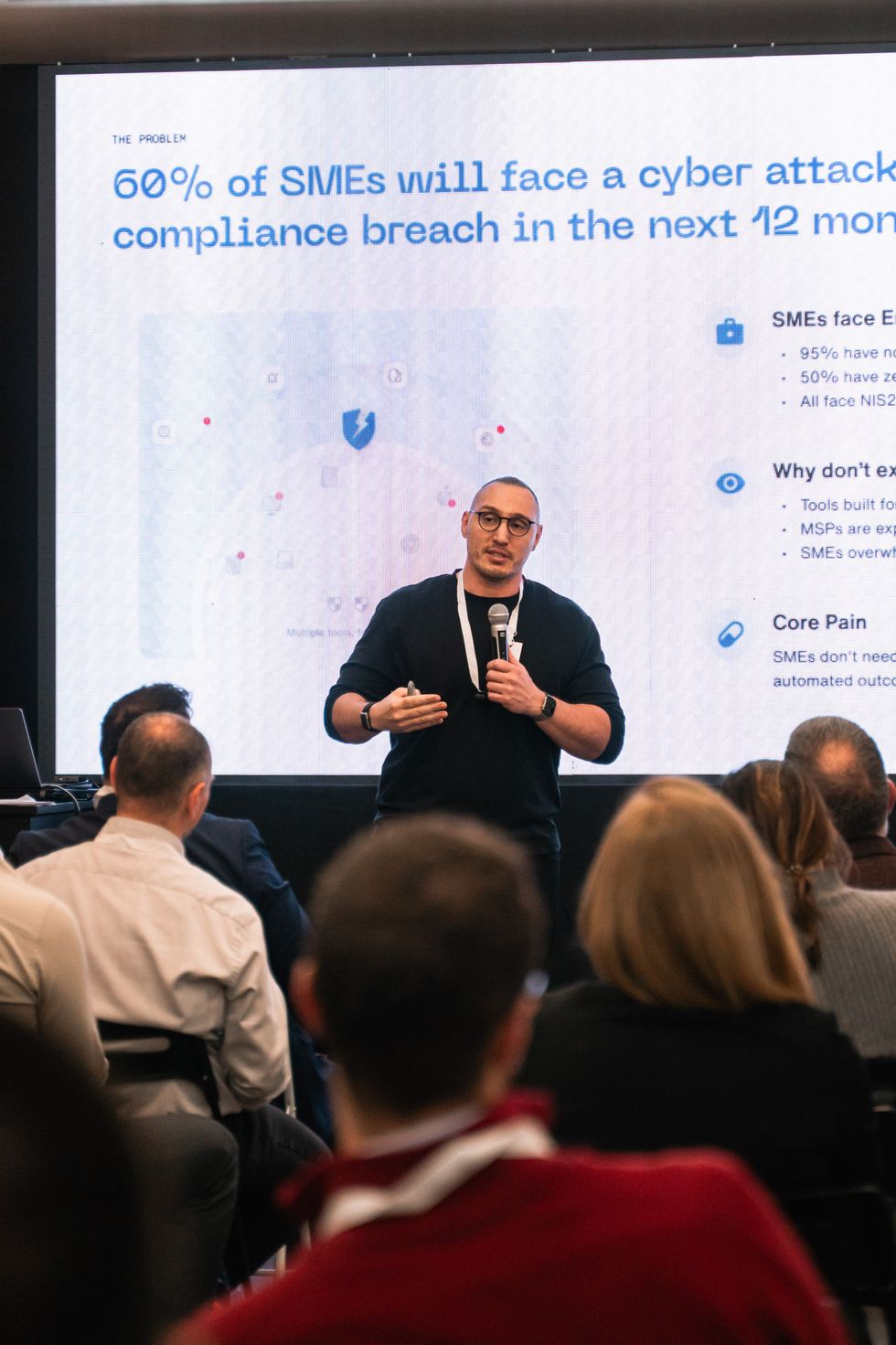
Five startups took the stage, selected through KFSEE’s screening and preparation process. Startups were evaluated by KFSEE and external operators in advance against practical criteria: clarity of business model, evidence of traction or validation, scalability potential, team execution capacity, and readiness for angel capital (including the ability to articulate a coherent ask tied to milestones), as well as their connection to the Western Balkans. The format was equally deliberate: a short pitch, followed by enough investor led Q&A.
The lineup reflected what the region is building, and what investors are watching:
- EasyPass (Serbia, EdTech): an education and training platform connecting learners and tutors, with a growing network and B2B learning use cases.
- GuideLites (Serbia, Enterprise / visitor management): digital reception software to modernize visitor flows, security, and compliance for workplaces.
- LoRaSi (Montenegro, Energy / deep tech): grid monitoring hardware + software aimed at increasing reliability and early anomaly detection for high voltage infrastructure.
- Cybee (Kosovo, Cybersecurity): a security and compliance platform designed to make resilience accessible to SMEs that can’t afford complexity.
- OsirisAI (Serbia, AI / SaaS): workflow and business automation positioned around making AI operational for real business processes.
Several founders were pitching to a room like this for the first time. You could see nerves, but also willingness to take feedback publicly. Investors asked the questions that separate a story from a business:
What’s the sales motion?
What traction is real versus implied?
What’s the wedge, and what happens after the wedge?
What does the ask unlock, and what milestones will you hit with it?
Why this team?
There were strong moments and weak moments. That’s normal. Early-stage is messy. Founders are building the plane while flying it. What was different was the room’s posture. The questions were tough because the room treated the pitches as the start of a process.
After the final pitch, the room moved from Observing to Deciding.
Investors moved into Mind Sharing, a closed working session where interest is recorded, a follow up lead is assigned, and the next action is agreed. Interest is captured formally, and next steps are defined and recorded inside Dealum so nothing gets lost in scattered email threads. Where there is genuine fit, KFSEE coordinates introductions and follow up conversations typically within 7-10 days, and the diligence path begins–structured, documented, and respectful of everyone’s time. Each investor decides independently whether to invest; KFSEE structures the process and coordination.
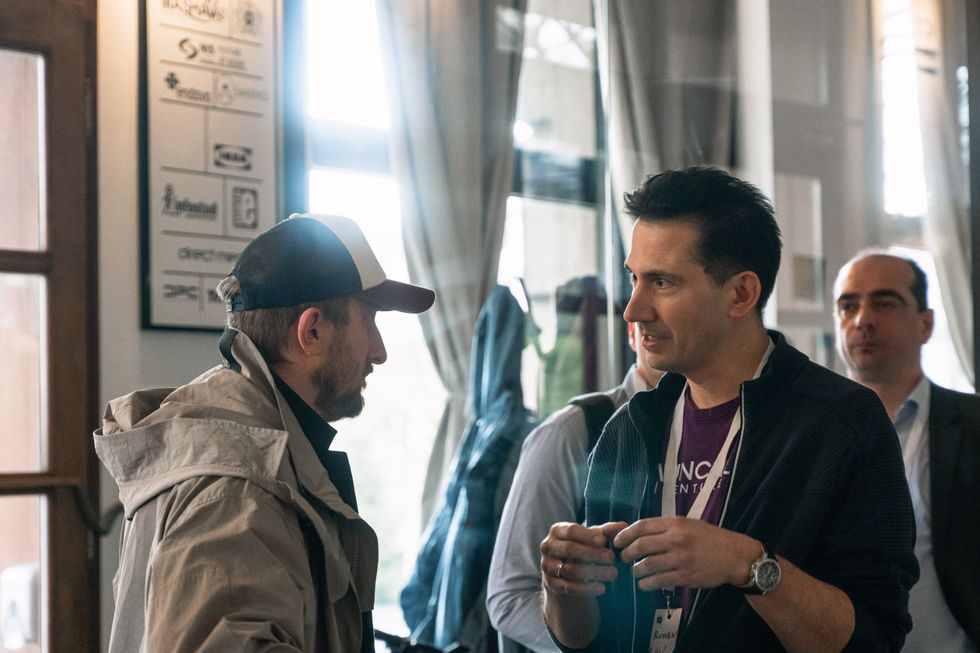
Outside the Mind Sharing room, networking continued, and it reflected the seriousness of the day. People weren’t collecting contacts for the sake of it. They were booking calls, offering introductions, and comparing notes across borders. One founder who didn’t pitch still walked out with a product demo scheduled with an investor in another country.
Earlier that morning, KFSEE hosted focused workshops designed specifically for youth and first time founders. They were sprint based, paper and pair, built around rapid iteration and peer feedback. Founders used the OPSA structure (Opening hook, Problem, Solution, Ask) to tighten their investor narrative, and learned that the “ask” is not always money; sometimes it’s a pilot, an introduction, or strategic guidance. They also mapped a simple six step customer journey from first awareness to payment to pressure test how customers actually find them, convert, and buy.
The friction is still real. Cross-border investment still runs into uneven tax treatment, banking rails that don’t cooperate cleanly, KYC that resets at borders, and legal complexity that makes small checks feel heavier than they should. This isn’t complaining, but rather the operating environment founders and investors deal with every week.
Belgrade proved something worth building on: when you design for follow through, you get follow through. When you treat young and first time founders as people who need preparation–not performance–you create confidence without false promises. When you bring founders, investors, and ecosystem builders into one room with clear roles, regional cooperation stops being a nice phrase and starts looking like calendars filling up with real next steps.
Now comes the part that will matter most, the follow ups: calls, diligence, and staying consistent when the excitement fades.
If you are a founder reading this, don’t wait to feel ready. Show up and get sharper. Learn to ask clearly. Learn to sell clearly. Follow up like your future depends on it, because it does.
If you are an investor, pipeline doesn’t appear on its own. You help create it by showing up early, giving honest feedback, collaborating with other angels when there is fit, and respecting founders enough to be direct.
If you are an ecosystem builder, your job isn’t to host another panel. Your job is to be connective tissue–to turn talent into opportunity by building bridges that hold.
KFSEE is not finished. They are moving.
And that movement-disciplined curation, structured Mind Sharing, coordinated diligence, and the early formation of regional syndication discipline-is the real signal. If it continues at this level of rigor, cross-border co-investment stops being an exception in the Western Balkans and starts becoming a repeatable outcome.
That’s how momentum builds.

`;
};
function injectAds() {
let adIndex = 0;
for (let i = 0; i < allArticleParapgraphs.length; i++) {
let loopCounter = i;
const paragraph = allArticleParapgraphs[i];
// Remove ‘.’ from classList.contains
if (paragraph.classList.contains(‘rebellt-item’) && paragraph.querySelector(‘img’)) {
loopCounter = 2;
}
if ((loopCounter + 1) % 3 === 0) {
if (adIndex >= adIds.length) {
break;
}
const paragraphToInjectAfter = paragraph;
if (adIndex === 1) {
const adIdToInject = adIds[adIndex];
const adHtml = getAdHtml(adIdToInject);
paragraphToInjectAfter.insertAdjacentHTML(‘afterend’, adHtml);
adIndex++;
} else {
const adIdToInject = adIds[adIndex];
const adHtml = getAdHtml(adIdToInject);
paragraphToInjectAfter.insertAdjacentHTML(‘afterend’, adHtml);
adIndex++;
}
}
}
}
injectAds();
})();
Top Lajme